.png)
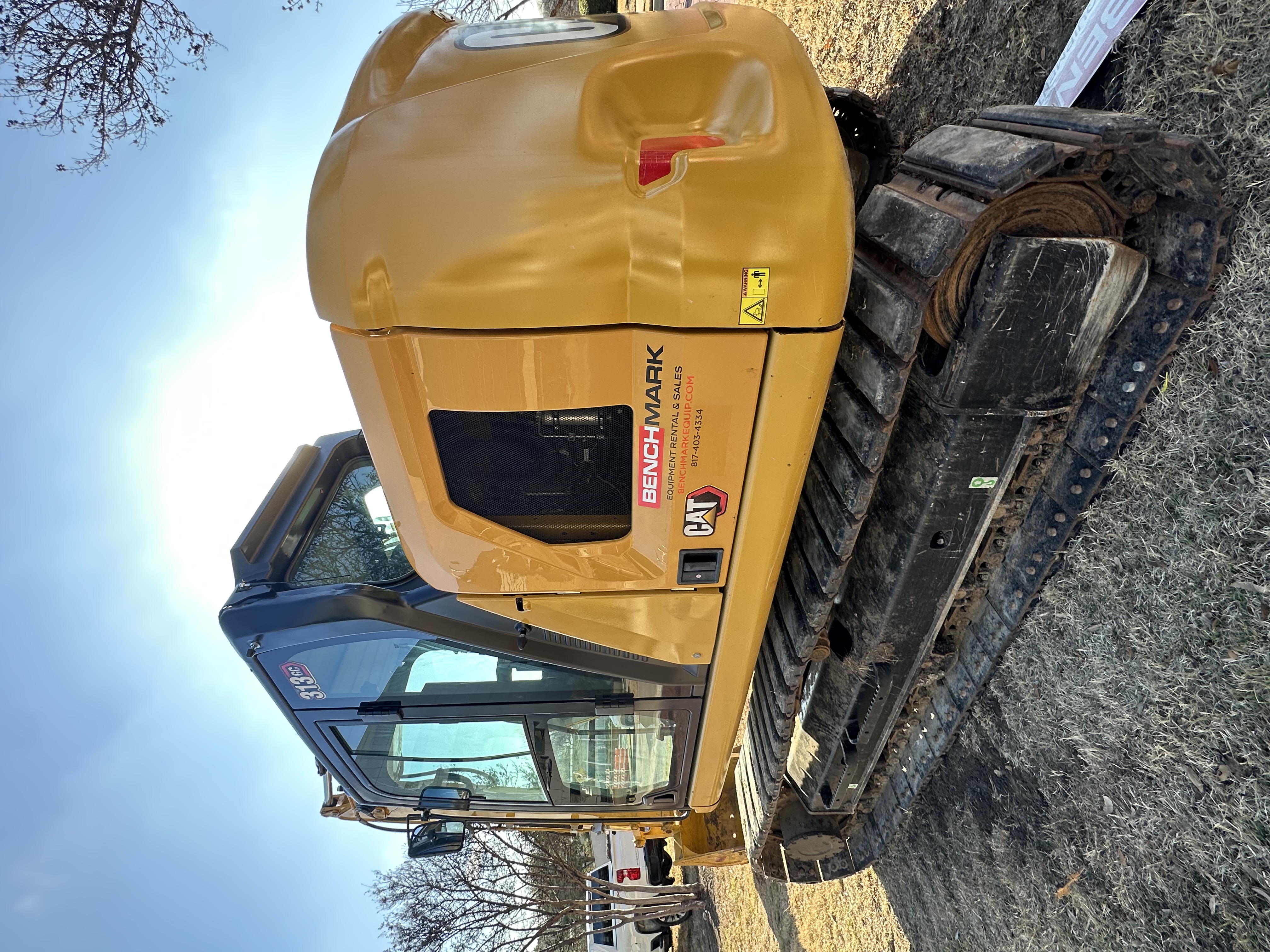
The construction industry stands at a technological inflection point where traditional iron meets intelligent systems, fundamentally transforming how projects are executed. According to MIT's Center for Construction Research and Education, construction companies adopting advanced equipment technology report productivity gains of 30-50% while reducing rework by up to 75%. Modern Cat equipment integrates sophisticated GPS guidance, real-time telematics monitoring, and precision grade control systems that deliver measurable improvements in accuracy, efficiency, and profitability. This comprehensive guide explores how these technologies revolutionize construction operations and why equipment with less than 8,000 operating hours provides optimal technology integration for forward-thinking contractors.
GPS Technology: Precision Navigation for Maximum Productivity
Global Positioning System integration in construction equipment has evolved from basic location tracking to sophisticated machine guidance that achieves sub-inch accuracy. The National Society of Professional Surveyors (NSPS) reports that GPS-equipped machines complete earthmoving projects 40% faster while reducing surveying costs by up to 90%, fundamentally altering project economics.
Modern Cat equipment utilizes dual GPS/GNSS receivers that communicate with multiple satellite constellations simultaneously, maintaining accuracy even in challenging conditions. These systems process correction signals from base stations or cellular networks, achieving horizontal accuracy within 1-2 centimeters and vertical precision of 2-3 centimeters. This level of accuracy eliminates the constant checking and rechecking that traditionally slowed production, allowing operators to work confidently at maximum speed.
3D machine control represents the pinnacle of GPS integration, transforming complex design files into real-time operational guidance. Operators load digital terrain models directly into machine displays, viewing their exact position relative to design grade in real-time. The Associated General Contractors of America (AGC) documents that 3D machine control reduces material overages by 25% while achieving grade specifications 50% faster than conventional methods.
Automated blade and bucket control takes GPS integration further by hydraulically controlling implements to maintain design grade automatically. Operators focus on forward movement while the system continuously adjusts cutting edges to match design profiles. This automation proves particularly valuable for complex surfaces like parking lots with multiple drainage slopes or roadways with super-elevation transitions. The technology virtually eliminates expensive rework—the Federal Highway Administration (FHWA) found that GPS-guided grading reduces rework rates from 15% to less than 2%.
Site-wide GPS integration enables multiple machines to share positioning data and design models, creating a coordinated digital ecosystem. Dozers rough grade areas based on the same model that excavators use for mass excavation, while compactors verify achieved elevations against design specifications. This integration eliminates interpretation errors between operations and ensures consistent execution across all equipment.
Telematics: Data-Driven Decision Making
Telematics technology transforms construction equipment from isolated assets into connected nodes in an intelligent network, providing unprecedented visibility into fleet performance and utilization. The Association of Equipment Management Professionals (AEMP) identifies telematics as the single most impactful technology for reducing operating costs, with adopters achieving 20-25% reduction in total ownership expenses.
Real-time monitoring capabilities extend far beyond simple location tracking. Modern Cat telematics systems continuously transmit engine parameters, hydraulic pressures, fuel consumption, and diagnostic codes to cloud-based platforms. Project managers access this data through intuitive dashboards that highlight anomalies, predict maintenance needs, and optimize deployment decisions. The Construction Financial Management Association (CFMA) calculates that telematics-based fleet optimization reduces equipment rental expenses by 15-30% through improved utilization.
Predictive maintenance algorithms analyze telematics data streams to identify degrading components before failure occurs. Machine learning models recognize patterns indicating impending issues—gradually increasing hydraulic temperatures might predict pump failure weeks in advance. The International Journal of Construction Management published research showing predictive maintenance reduces unplanned downtime by 75% while extending component life by 20-25%.
Utilization analytics reveal opportunities for fleet optimization that directly impact project profitability. Telematics data identifies underutilized machines for redeployment or return, while highlighting equipment approaching rental overtime thresholds. Geofencing capabilities alert managers when equipment leaves designated areas, preventing theft and unauthorized use that costs the industry $1 billion annually according to the National Equipment Register (NER).
Operator behavior monitoring through telematics improves both productivity and equipment longevity. Systems track harsh acceleration, excessive idle time, and improper operating techniques that accelerate wear. The National Institute for Occupational Safety and Health (NIOSH) correlates operator scoring programs with 30% reduction in equipment abuse and 25% improvement in fuel efficiency.
Grade Control Systems: Achieving Perfect Elevation Every Time
Advanced grade control technology represents the convergence of GPS positioning, machine sensors, and hydraulic automation to achieve unprecedented grading accuracy. The American Society of Civil Engineers (ASCE) recognizes grade control as transformative technology that addresses the construction industry's persistent productivity challenges.
Integrated grade control on Cat equipment combines multiple sensor inputs to maintain precise elevation regardless of machine attitude or ground conditions. Inertial measurement units (IMUs) detect machine pitch, roll, and yaw thousands of times per second, compensating for rough terrain that would otherwise compromise accuracy. Sonic tracers and laser receivers provide additional reference points, creating redundant systems that maintain precision even when GPS signals are compromised.
Cross-slope sensors automatically maintain consistent slopes perpendicular to machine travel direction, crucial for roadway construction and drainage applications. Operators input desired slope percentages, and the system continuously adjusts blade angles to maintain specification regardless of terrain variations. The Transportation Research Board (TRB) documents that automated cross-slope control reduces drainage-related pavement failures by 60%, extending road life significantly.
Augmented reality displays overlay grade information directly onto operator views, eliminating the cognitive load of interpreting numerical readouts. Color-coded cut/fill mapping shows exactly where material needs to be removed or added, while real-time productivity metrics help operators optimize their techniques. These intuitive interfaces reduce training time by 50% while improving new operator productivity according to Equipment World magazine.
Integration with project management software enables real-time progress tracking and documentation. Grade control systems automatically generate as-built surveys, eliminating manual verification requirements. Quality assurance teams access elevation data remotely, identifying potential issues before concrete pours or asphalt placement. This digital documentation trail proves invaluable for dispute resolution and payment applications.
The Low-Hour Technology Advantage
Equipment with less than 8,000 operating hours provides superior technology integration that maximizes return on technology investment. The Construction Equipment Association (CEA) emphasizes that technology effectiveness depends heavily on proper calibration, sensor condition, and system integration—all of which degrade with equipment age and use.
Sensor accuracy directly impacts technology performance, and low-hour machines maintain factory calibration standards longer. GPS receivers, IMUs, and hydraulic sensors drift over time due to vibration, temperature cycling, and component wear. Machines under 8,000 hours typically maintain accuracy within 95% of original specifications, while equipment exceeding 12,000 hours may experience 20-30% degradation in sensor precision.
Software compatibility becomes crucial as technology platforms evolve rapidly. Low-hour equipment ships with current firmware versions that support the latest features and security updates. Older machines may lack processing power or memory to run modern software effectively, limiting access to productivity-enhancing features. The National Institute of Standards and Technology (NIST) notes that technology obsolescence accelerates after 5-7 years, making low-hour equipment essential for maintaining competitive advantage.
System integration reliability ensures all technology components communicate effectively. Low-hour machines maintain tight electrical connections, clean data buses, and properly functioning controllers that enable seamless information flow between systems. This integration reliability becomes critical when using multiple technologies simultaneously—GPS, grade control, and telematics must work in harmony to deliver maximum value.
Implementation Strategies for Technology Adoption
Successfully implementing construction equipment technology requires thoughtful planning, comprehensive training, and organizational commitment. The Project Management Institute (PMI) identifies change management as the primary factor determining technology adoption success, emphasizing that human factors outweigh technical considerations.
Phased implementation allows organizations to build expertise gradually while demonstrating value to stakeholders. Begin with telematics deployment to establish baseline metrics and identify improvement opportunities. Add GPS guidance on select machines to prove productivity gains before expanding fleet-wide. Introduce grade control on specific applications where accuracy requirements justify investment. This staged approach reduces risk while building organizational confidence.
Conclusion
Technology integration in modern construction equipment represents a fundamental shift from mechanical operation to intelligent systems that dramatically improve productivity, accuracy, and profitability. GPS guidance, telematics monitoring, and grade control automation deliver measurable returns that justify investment for contractors committed to remaining competitive. The selection of low-hour equipment with less than 8,000 operating hours ensures optimal technology performance through superior sensor accuracy, current software compatibility, and reliable system integration. As construction technology continues advancing rapidly, partnering with owner-operators who maintain modern, low-hour fleets provides access to these transformative capabilities without capital investment risk, positioning contractors at the forefront of industry innovation while delivering superior project outcomes that strengthen competitive advantage.
-Tyler McClain