.png)
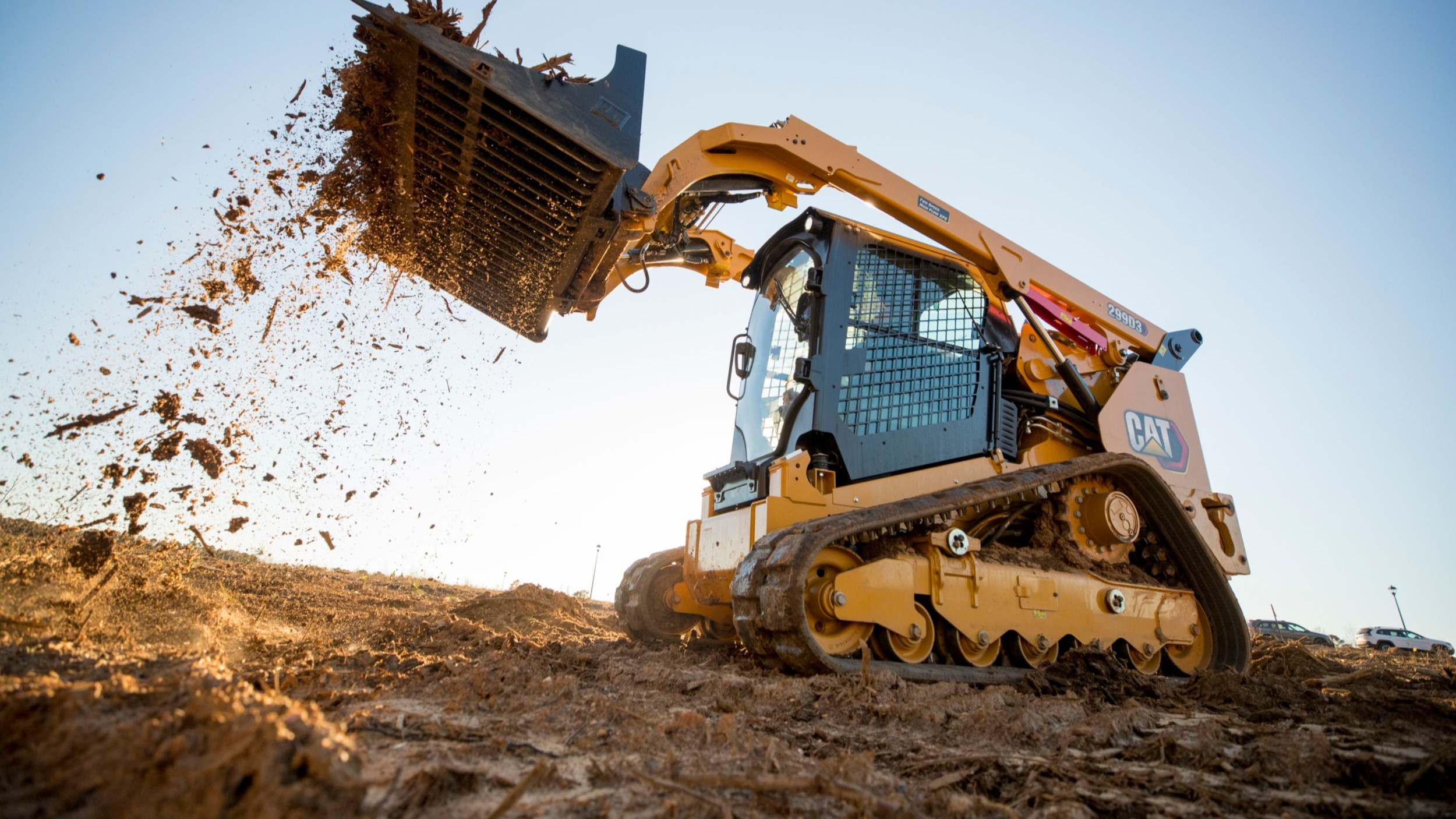
In the dynamic world of construction and landscaping, few machines match the remarkable versatility of the Cat skid steer loader. These compact powerhouses have revolutionized job site productivity by replacing multiple specialized machines with a single, adaptable platform. According to Research and Markets' construction equipment analysis, the global skid steer market continues expanding at 7.2% annually, driven primarily by their unmatched versatility and return on investment. This comprehensive guide explores how Cat skid steers transform from earthmovers to precision tools, making them indispensable assets for contractors across every industry sector.
Understanding the Cat Skid Steer Advantage
Caterpillar's skid steer lineup represents decades of engineering refinement focused on maximizing operational flexibility. The official Caterpillar equipment specifications reveal machines ranging from the compact 215 model to the powerful 299D3 XE, each designed to excel across diverse applications while maintaining the reliability Cat is renowned for.
The fundamental design principle behind skid steer versatility lies in their unique steering mechanism and universal attachment interface. Unlike traditional wheeled loaders that require significant space for turning, skid steers pivot within their own footprint, enabling operation in confined spaces where larger equipment cannot venture. This zero-radius turning capability, combined with exceptional visibility and intuitive controls, allows operators to tackle precision work typically reserved for manual labor.
Power-to-weight ratios in Cat skid steers optimize performance across varied terrains and applications. Vertical lift path models excel at loading trucks and placing materials at height, while radial lift machines provide superior digging force and ground-level material handling. The Associated Equipment Distributors (AED) notes that this design diversity enables contractors to select models perfectly matched to their primary applications while retaining broad operational capabilities.
Advanced hydraulic systems distinguish Cat skid steers from competitors, delivering consistent power to attachments regardless of engine load. High-flow hydraulic options enable operation of demanding attachments like cold planers and mulchers that would overwhelm standard hydraulic systems. This hydraulic sophistication, particularly evident in low-hour machines under 8,000 hours, ensures attachments operate at peak efficiency while maintaining precise control.
Construction Applications: Building Better, Faster
Construction sites worldwide rely on Cat skid steers for tasks ranging from foundation preparation to final grade establishment. The Engineering News-Record (ENR) identifies skid steers as essential equipment for 78% of commercial construction projects, highlighting their central role in modern building practices.
Site preparation showcases skid steer versatility perfectly. Equipped with buckets, these machines clear debris, move soil, and establish rough grades efficiently. Switching to an auger attachment transforms the same machine into a precision foundation drill, creating post holes or pier foundations with accuracy unmatched by manual methods. Trencher attachments enable utility installation without mobilizing dedicated trenching equipment, reducing project costs and complexity.
Material handling represents another core construction application where Cat skid steers excel. Pallet fork attachments convert skid steers into agile forklifts capable of navigating congested job sites while placing materials precisely where needed. The National Association of Home Builders (NAHB) reports that skid steers with grapple attachments reduce material handling time by up to 60% compared to manual methods, directly impacting project profitability.
Demolition work leverages skid steer compactness and power effectively. Hydraulic breaker attachments transform these machines into controlled demolition tools perfect for interior work or selective structure removal. The ability to quickly switch between breaking, loading, and cleanup operations using different attachments maximizes productivity while minimizing equipment mobilization costs.
Landscaping Excellence: Precision Meets Power
Professional landscapers have embraced Cat skid steers as their primary equipment platform, recognizing how attachment versatility enables them to complete diverse projects efficiently. The National Association of Landscape Professionals (NALP) estimates that landscaping companies utilizing skid steers complete projects 40% faster than those relying on traditional equipment combinations.
Grading and soil preparation demonstrate skid steer advantages in landscaping applications. Laser grading attachments achieve precise elevations for drainage and aesthetic purposes, while soil conditioners prepare seedbeds perfectly in a single pass. Power rakes create smooth, professional finishes that manual raking cannot match, particularly across large areas.
Hardscaping installations benefit significantly from skid steer versatility. These machines transport and place heavy materials like retaining wall blocks and pavers efficiently, reducing crew fatigue and injury risk. Vibratory plate attachments compact base materials uniformly, ensuring long-lasting installations. When equipped with trenchers, skid steers install irrigation systems and landscape lighting with minimal turf disruption.
Tree and vegetation management showcases specialized attachment capabilities. Stump grinders eliminate unsightly remnants without disturbing surrounding landscapes, while brush cutters clear overgrown areas rapidly. The Tree Care Industry Association (TCIA) acknowledges that skid steers equipped with grapple saws have revolutionized urban forestry by enabling precise tree removal in confined spaces.
Agricultural Innovation: Farm Productivity Reimagined
Agricultural operations increasingly recognize Cat skid steers as invaluable assets that adapt to seasonal demands and diverse farm tasks. The American Society of Agricultural and Biological Engineers (ASABE) documents productivity improvements exceeding 35% when farms integrate skid steers into their equipment fleets.
Feed handling represents a daily application where skid steers prove indispensable. Bucket attachments mix and distribute feed efficiently, while bale spears transport round and square bales effortlessly. The ability to navigate narrow barn aisles and tight spaces makes skid steers ideal for confined animal feeding operations where larger tractors cannot operate effectively.
Maintenance and cleanup tasks benefit from skid steer maneuverability and attachment options. Scraper attachments clean feedlots efficiently, while sweeper attachments maintain farmyard cleanliness. During harvest season, grain bucket attachments assist with commodity handling, bridging gaps in primary harvest equipment capability.
Seasonal versatility extends skid steer value throughout the year. Snow removal attachments including blades, blowers, and pushers keep operations accessible during winter months. Spring brings demands for fence post installation and pasture maintenance, tasks easily accomplished with appropriate attachments. This year-round utility justifies investment for agricultural operations previously relying on manual labor or multiple specialized machines.
The Low-Hour Advantage in Multi-Application Use
Selecting Cat skid steers with less than 8,000 operating hours provides distinct advantages for versatility-focused operations. The Equipment Leasing and Finance Association (ELFA) confirms that low-hour equipment maintains consistent performance across diverse applications, ensuring reliable operation regardless of task demands.
Attachment coupling systems on low-hour machines operate smoothly and securely, critical when frequently changing attachments. Worn coupling mechanisms on high-hour machines create dangerous situations and reduce attachment effectiveness. Additionally, hydraulic systems in low-hour equipment maintain optimal flow rates and pressures, ensuring attachments receive adequate power for peak performance.
Control responsiveness remains crucial for precision work, particularly in landscaping and construction applications requiring delicate material placement. Machines with fewer operating hours maintain tighter tolerances in control linkages and hydraulic valves, translating operator inputs into precise machine movements. This precision becomes especially important when operating attachments like augers or trenchers where accuracy directly impacts work quality.
Conclusion
Cat skid steer versatility transcends traditional equipment boundaries, offering contractors, landscapers, and farmers a single platform capable of replacing entire equipment fleets. From construction sites requiring everything from demolition to precision grading, to agricultural operations demanding year-round functionality, these remarkable machines adapt to meet diverse challenges efficiently. The strategic selection of low-hour equipment, particularly machines under 8,000 hours, ensures optimal performance across all applications while maintaining the reliability necessary for professional operations. As attachment technology continues advancing and operational demands evolve, Cat skid steers remain positioned as the ultimate multi-tool for modern equipment fleets, delivering unmatched versatility that transforms how work gets accomplished across every industry sector.